AMC's The Walking Dead Social Game: Chronicles
The Walking Dead: Chronicles is a mid-core dungeon crawling social game based on AMC's hit show The Walking Dead. TWD:C features an exciting mix of stealth, combat, crafting and a compelling storyline. TWD:SG:C was formerly known as The Walking Dead: Social Game.
TWD was the 2nd project I worked on at Eyes Wide Games. The project ran from 2010 to 2014, while I was on the project from 2012 to 2014.
While I was working on TWD the game went through several design changes. The biggest change I led was moving the quest and world progression system from linear instanced content loaded by navigating UI menus to a completely open world system. Prior to the change, players had a "camp" with a cluster of NPCs that provided main story quests and repeatable side quests. Placement of objects and NPCs would only change based on progression through the main story. In camp, you could not venture out into the open world. It made the world feel small and detached from the areas you went in the missions.
Converting the game to be open world really helped with world building and gave the players more connection to those places they saw in missions. We already had support to stitch together multiple maps in the old instanced system. We modified that loading system to stitch together our previous solo mission maps to create a world you could openly move in.

I started as an Associate Technical Artist on The Walking Dead Social Game: Chronicles in 2011. I took on the roles of Lead Level Designer and Lead Technical Artist in 2012.
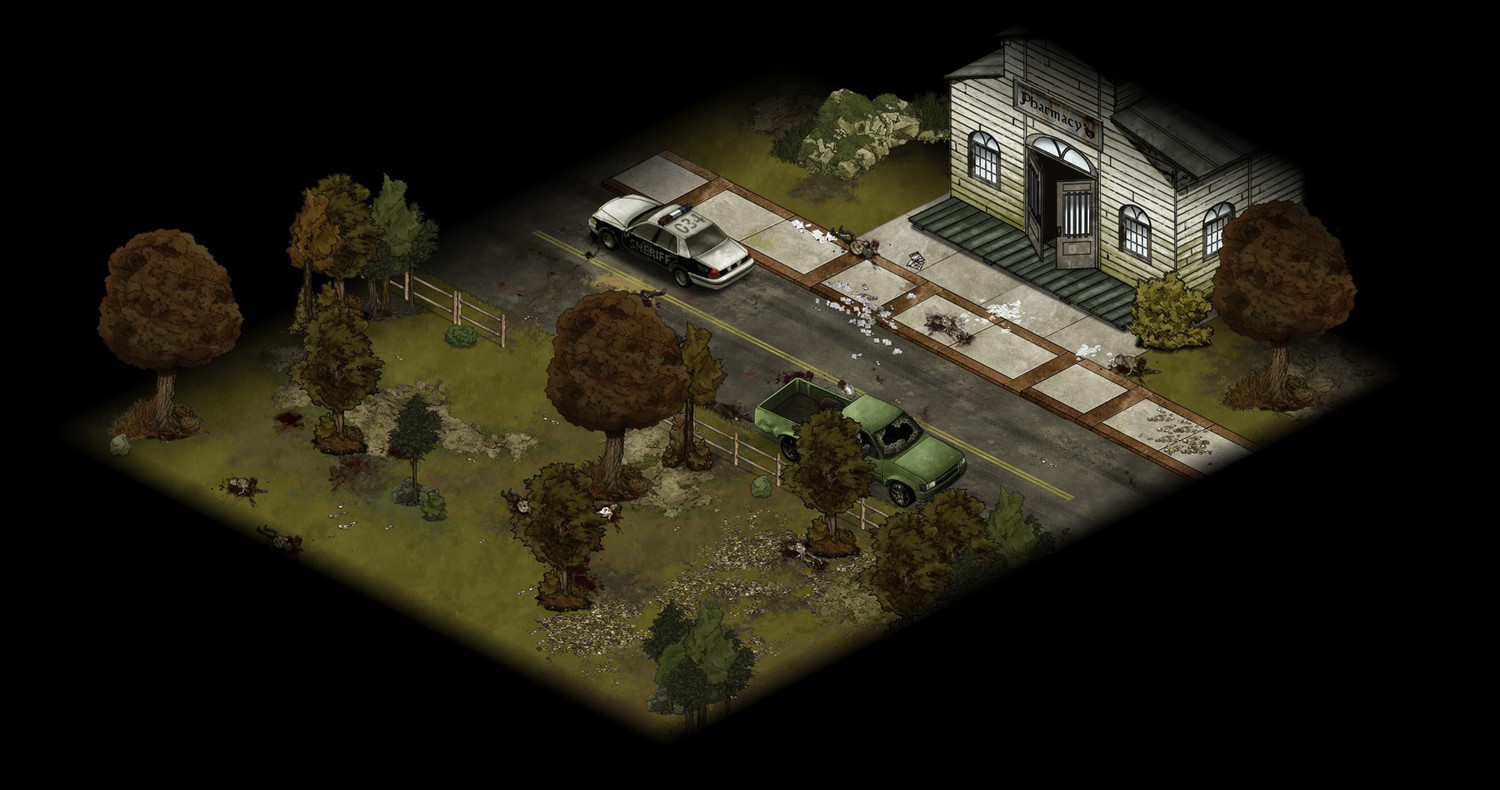
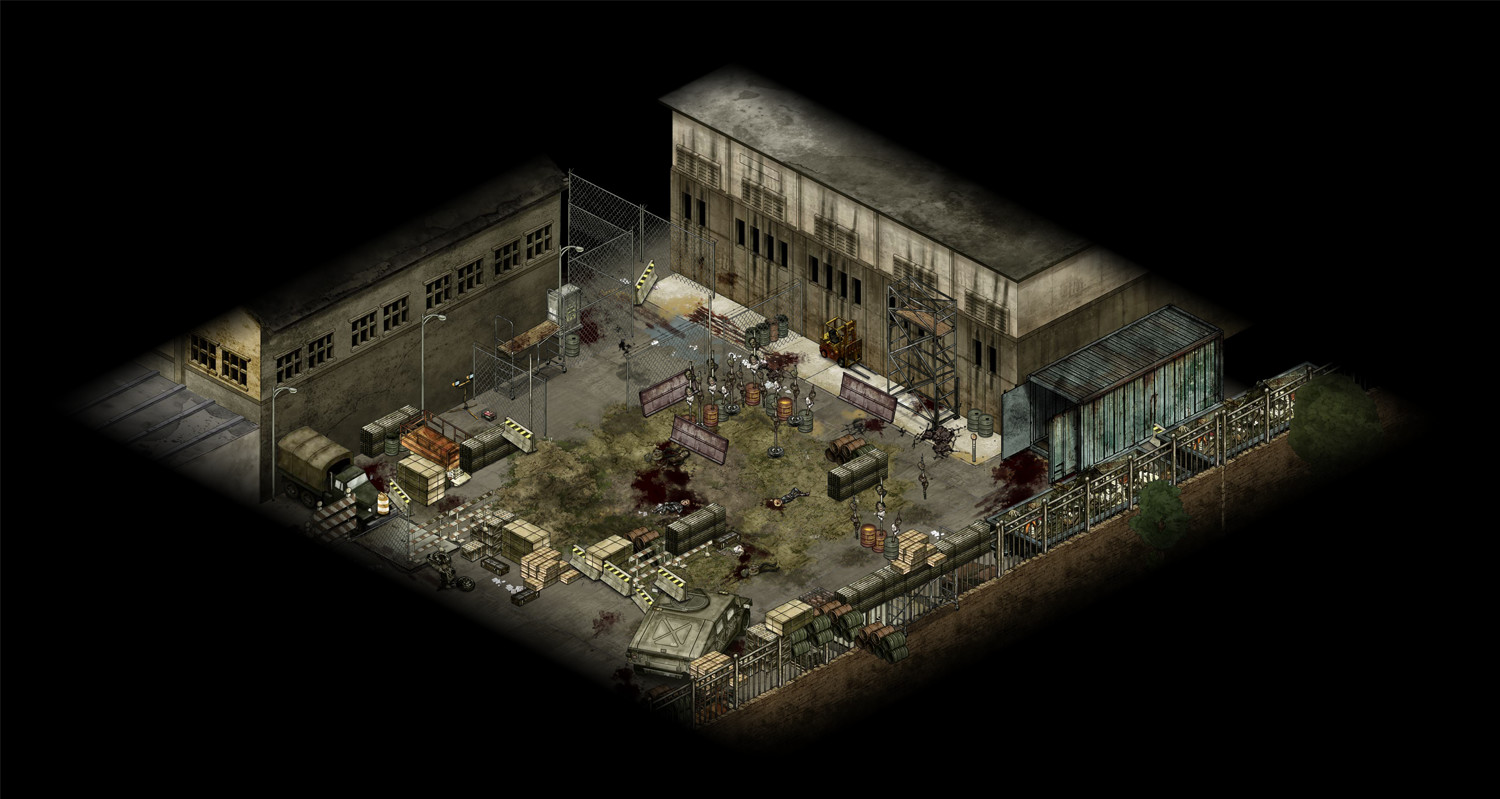
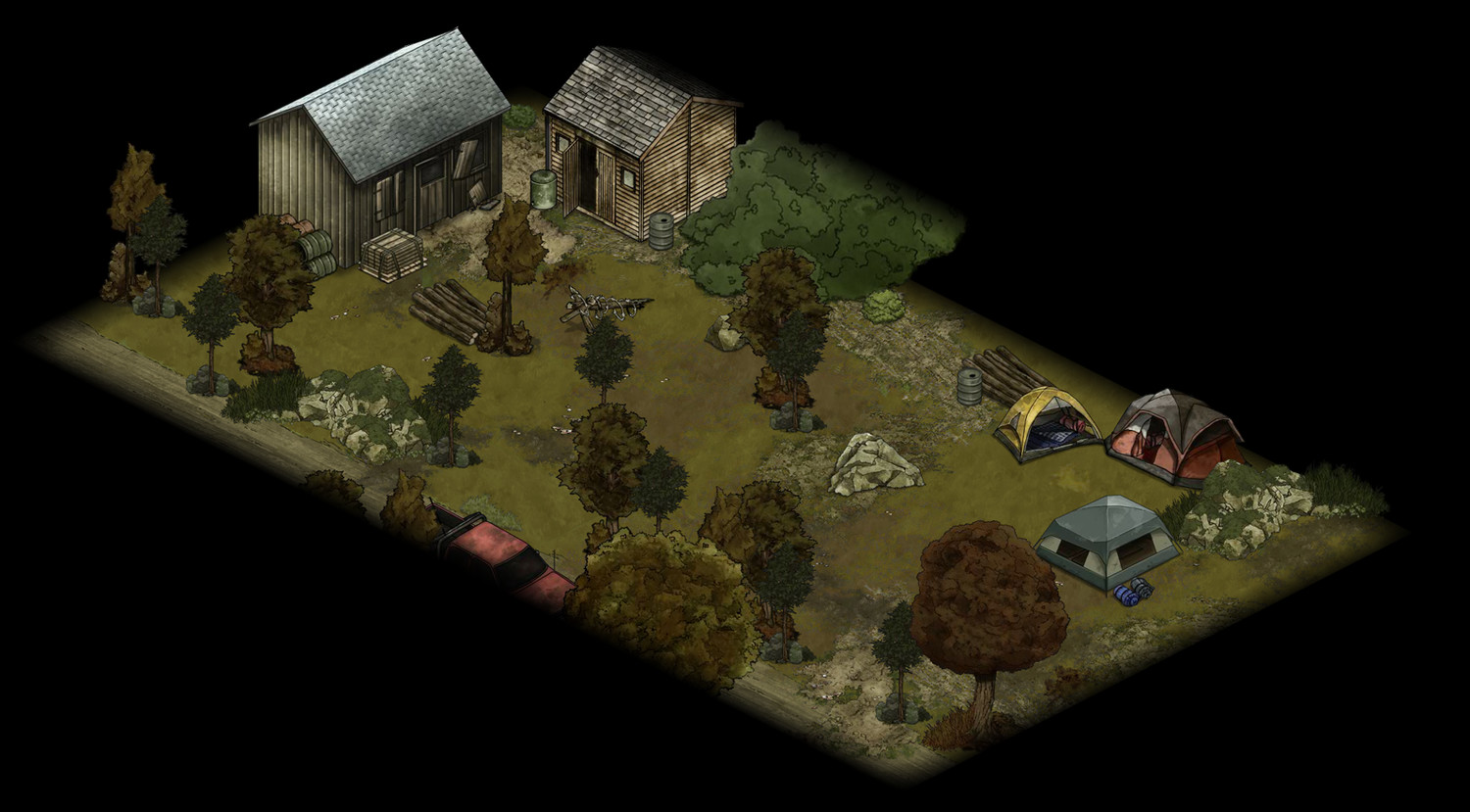
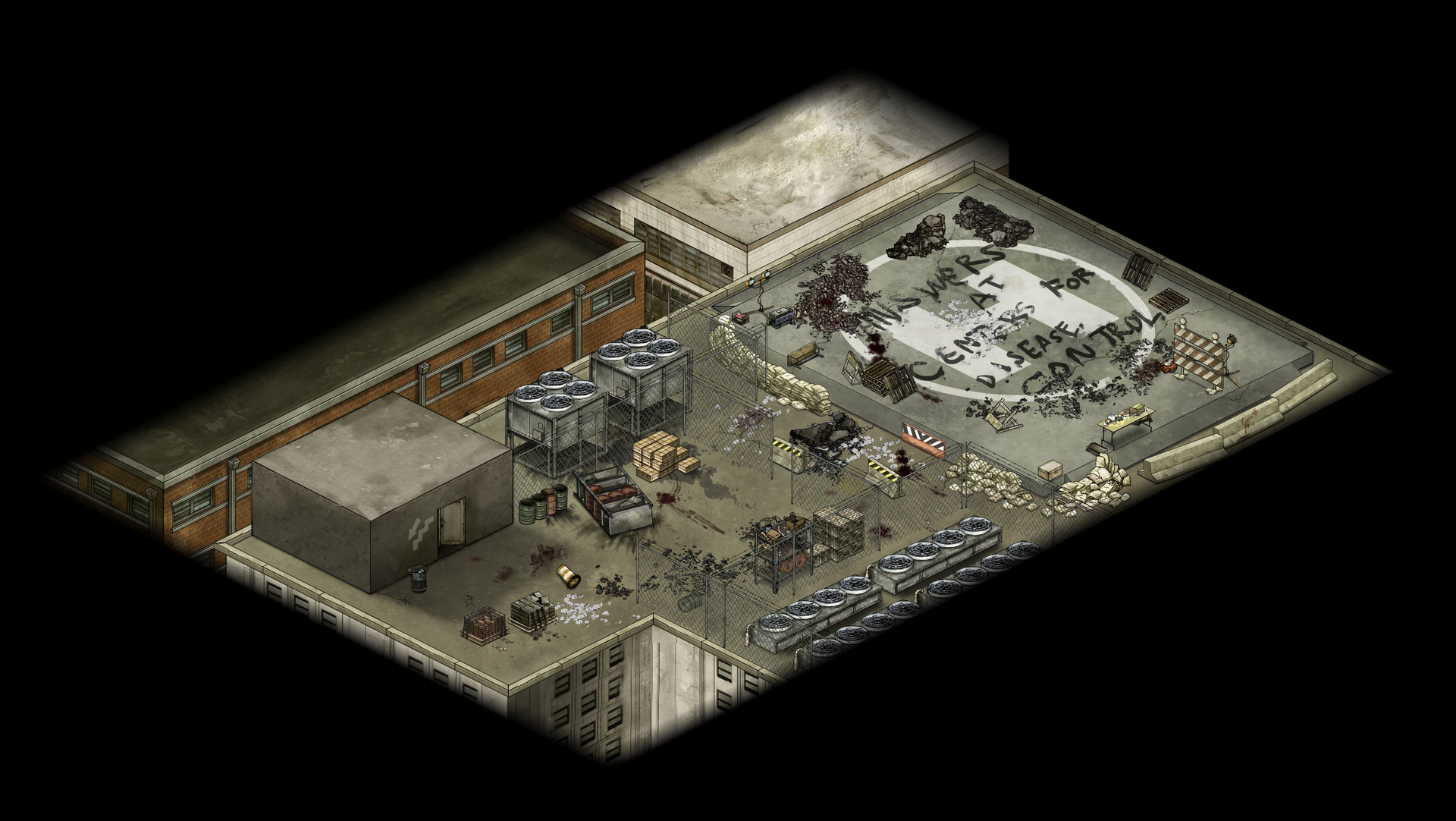
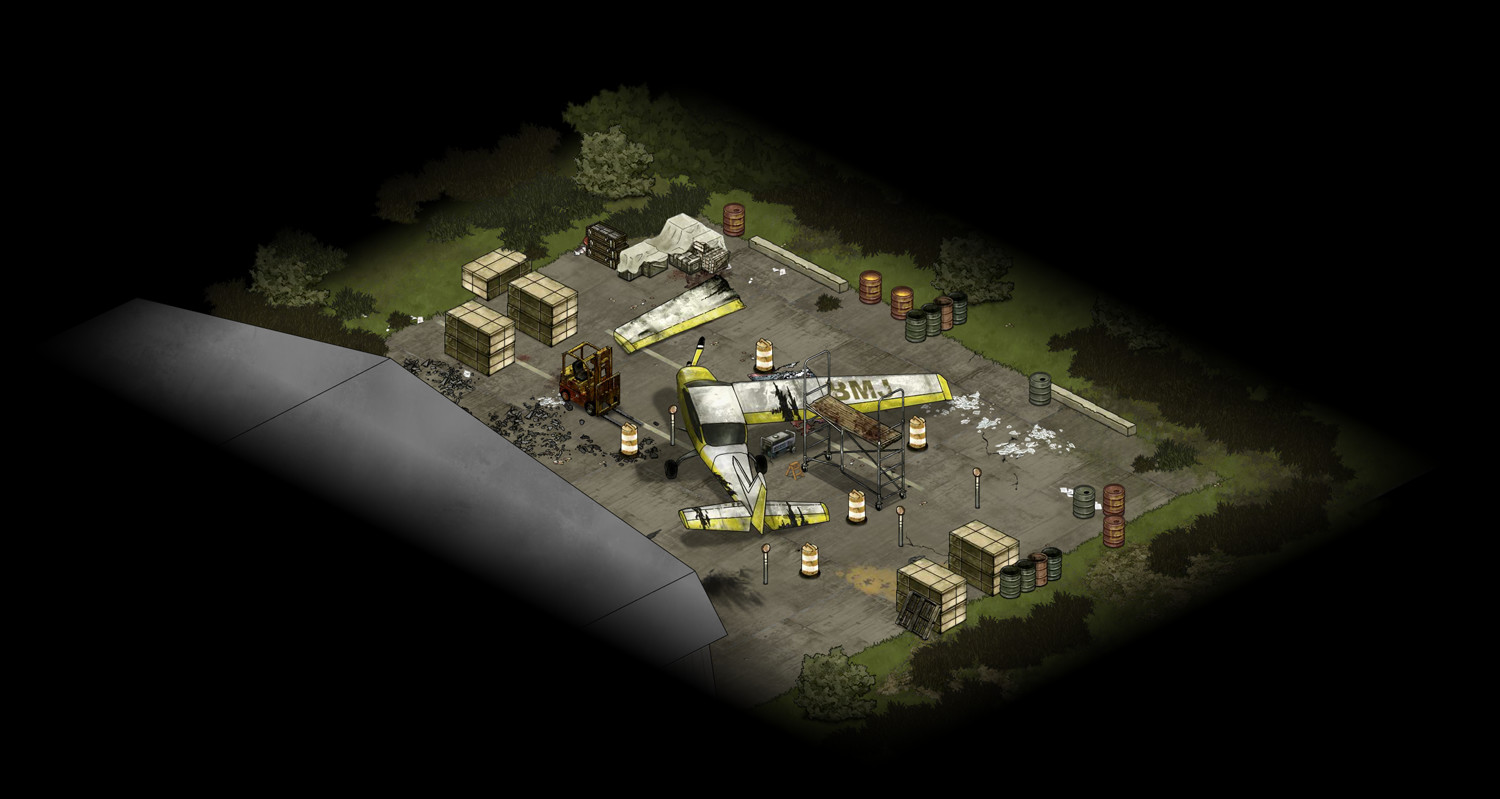
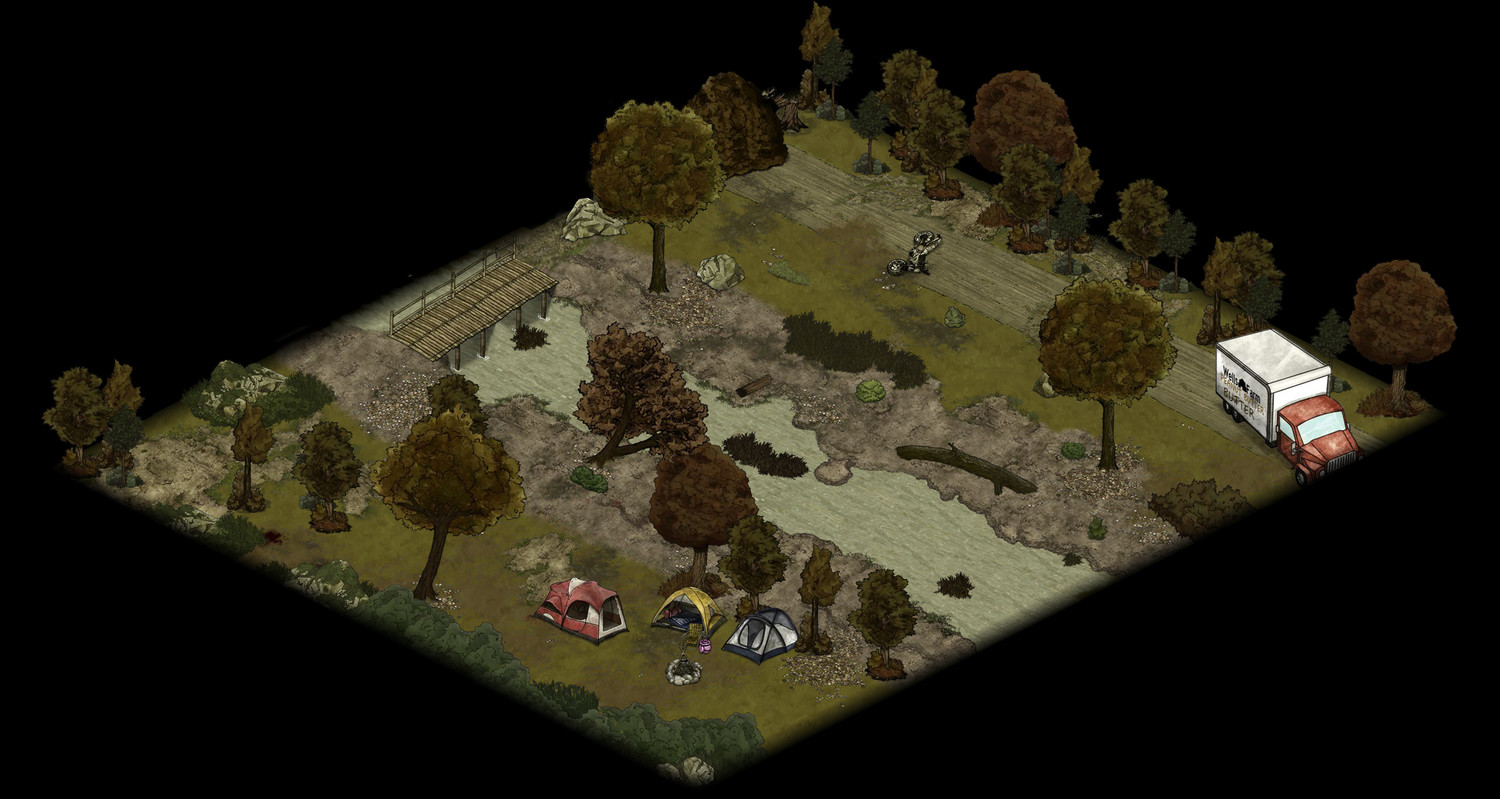
Below are environment examples from The Walking Dead Social Game: Chronicles


The diagram shows how I structured the world for each chapter of the game. As players completed missions, new sections of the world would unlock advancing the story and allowing the player to encounter new enemies, treasures, and allies.
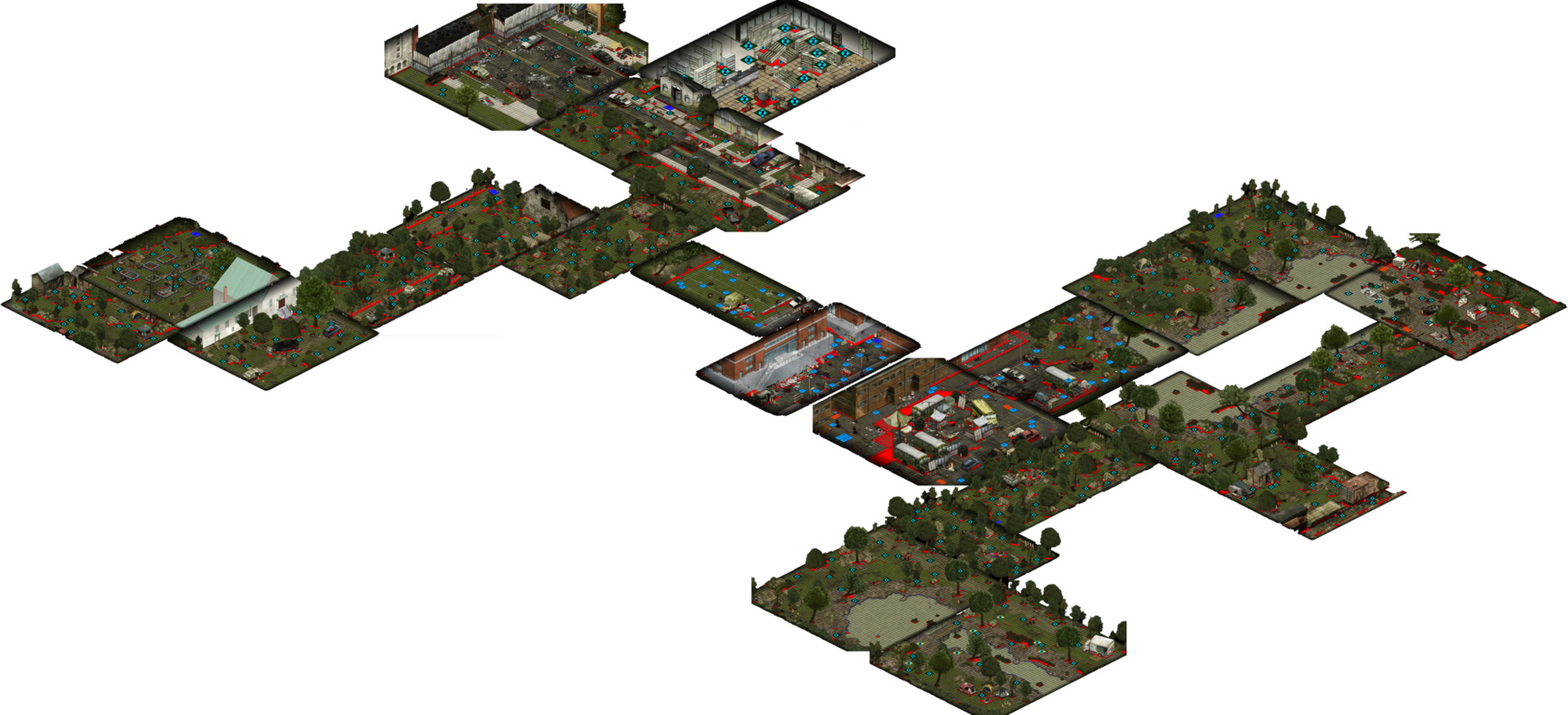
This image shows an overview of the Chapter 9 world (from diagram above) using in-game assets. It gives a more realistic view if the areas of this small town, with a local high school being the focal point.